
If you’re in an emergency, call (000).
Find out how to perform CPR on a child (1-8 years old) by following the guide below. You can also go to specific guides on CPR for adults & older children (over 8 years), infants and during pregnancy.
Please note, the information below is not a substitute for first aid training.
How to determine if CPR is necessary
The DRSABCD action plan is a structured way of assisting a casualty. It includes vital steps such as assessing for danger, checking for a response, sending for help, clearing and opening the airway, and checking for breathing.
The Basic Life Support chart below shows all the critical steps leading up to performing cardiopulmonary resuscitation (CPR).


Step-by-step guide
After having followed the DRSABCD plan, follow the steps below. CPR is performed at a ratio of 30:2 (30 chest compressions + 2 rescue breaths).
Chest compressions
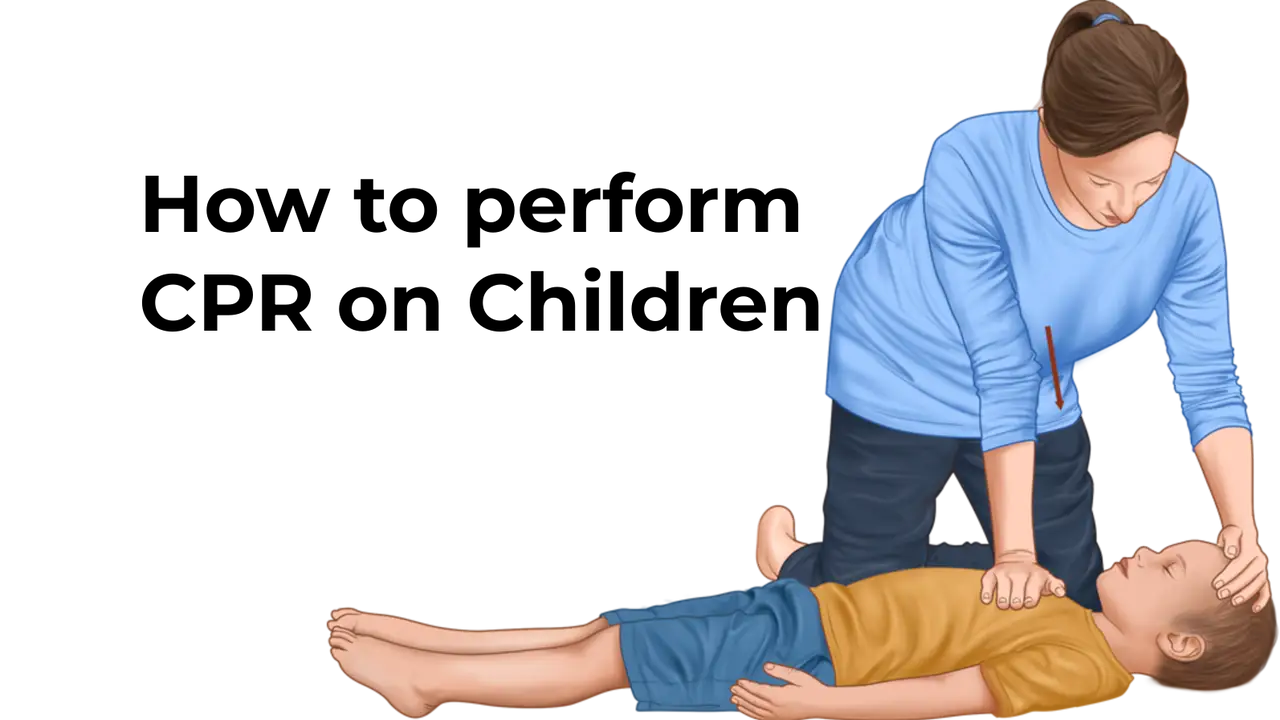
1. Place the child on a firm surface on their back. Kneel beside them.
2. Place the heel of one hand on the lower half of the sternum. Use your other hand to gently hold their head in place.


Rescue breaths (mouth-to-mouth)
After the 30 compressions, give 2 rescue breaths.
1. Open the child's airway.Ensure the head is tilted back and the chin is lifted by placing one hand on their forehead and the other hand under their chin to tilt the head back.


- The child is positioned properly.
- The airway is not obstructed by a foreign body - if it is - remove it.
- The nose is pinched closed to prevent any air from escaping and you maintain a tight seal with the child's mouth.
One cycle of CPR consists of 30 compressions + 2 rescue breaths. Keep repeating this process and aim to do 5 cycles of CPR in roughly 2 minutes. Giving life-saving CPR is tiring. If you have another person to help you, swap with minimal interruption, so they give compressions and rescue breaths every 5 cycles.
Using an AED
Where an AED is available, turn it on and attach pads or have a bystander attach them so you can continue doing compressions. Follow the AED’s instructions. An AED will analyse heart rhythm every 2 minutes. It may or may not give a shock. Continue to give CPR in between each analysis cycle. Find out more about using an AED.

- the child responds or resumes breathing normally
- it is impossible to continue e.g. due to exhaustion
- a health care professional takes over or directs that CPR be ceased (don't stop until they tell you)
- it is too dangerous to continue
If the child resumes normal breathing then place them in the Recovery Position and monitor breathing until help arrives.


Other CPR Resources
- How to perform CPR - Adults & Older Children
- How tp perform CPR - Infants
- How to perform CPR - Pregnancy
Visit the Australia Wide First Aid CPR Library for even more information, guides and downloadable resources.
Disclaimer: This article is for informational purposes only. It does not constitute, replace, or qualify as any form of first aid training.
Our Pocket Mask Training online course gives you the knowledge you need to be able to effectively us a pocket mask or face shield during CPR. Being fully online means you can work through it at your own place, either at your desk at work or in the comfort of your own home. Read the texts, watch the videos, and answer the quiz questions - it's as easy as that! You'll also receive a Certificate of Completion at the end of the course - perfect to hand to your employer or put on your resume.