
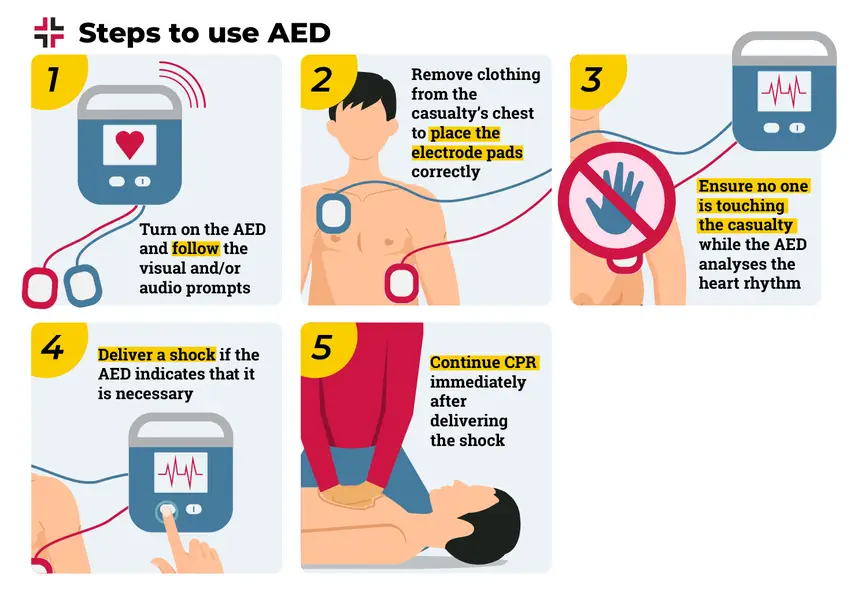
An Automated External Defibrillator (AED) is a life-saving device designed to treat sudden cardiac arrest caused by arrhythmias such as ventricular fibrillation and pulseless ventricular tachycardia. AEDs are user-friendly and designed for use by laypersons, providing clear voice and visual instructions to guide the user through the defibrillation process. The device analyzes the heart’s rhythm and, if necessary, delivers an electric shock to restore a normal rhythm.
AEDs are commonly placed in public locations like airports, sports arenas, and shopping centers to ensure rapid access in emergencies. When using an AED, it is crucial to follow the prompts precisely and ensure no one is touching the casualty during the shock delivery. Early defibrillation, combined with CPR, significantly increases the chances of survival for cardiac arrest victims.
Steps for Use
- Turn on the AED and follow the visual and/or audio prompts
- Remove clothing from the casualty’s chest to place the electrode pads correctly
- Ensure no one is touching the casualty while the AED analyses the heart rhythm
- Deliver a shock if the AED indicates that it is necessary
- Continue CPR immediately after delivering the shock
Device that delivers electric shocks to restore heart rhythm.